Words That Make You Stronger: The Science of Cueing
Oct 30, 2026
The Mind–Body Connection
Words That Make You Stronger: The Surprising Science of How We Cue in Class
Why you will never hear "don't hurt yourself" in a VASIE® class, and what we say instead.
The short version
✓ If someone tells you what NOT to do, your brain pictures the mistake—then practices it. When you're tired or under pressure, you often end up doing exactly what you were trying to avoid. Psychologists call this the ironic effect, and it's been proven in sports like golf, shooting, and tennis.
✓ Negative words can literally make you weaker. In one study, just hearing words like "pain" or a warning dropped maximal muscle strength in nearly 9 out of 10 people. But when the same information was delivered with gentler words, strength stayed the same.
✓ Your brain learns movement best when it expects to succeed and focuses on what the movement does (like pressing the floor away), not just on what body part to squeeze.
✓ VASIE® instructors are trained to tell you what to DO for safety—not what to avoid. That way, you feel strong and safe at the same time, which is exactly the goal.
"Don't let your back arch."
It sounds like a safety instruction. It is meant kindly. And it is one of the most common sentences spoken in exercise rooms across the country. Here is what happens inside your head when you hear it: to make sure your back does NOT arch, your brain first has to picture your back arching. It builds the exact movement you were told to avoid, then stands guard over it. That takes attention. And the moment you are tired, nervous, or new, the guard gets distracted, and the arch slips through.
If you have ever been told "don't lock your knees" and immediately felt your knees lock, you already know this is true. The research backs you up.
What you have probably been told, and why it was well-meant
Most of us learned to exercise in rooms where the instructor's job was to warn us. "Don't round your back." "Careful, you'll hurt your neck." "Engage your core, or you'll tweak something." Some of us have been handed a whole list of injuries to avoid before the warm-up was over.
None of this is lazy or careless. It comes from instructors who genuinely want you safe. The trouble is that a warning is not an instruction. "Don't hurt yourself" tells you the goal but gives you nothing to DO, in the same way that "have a happy life" or "make sure you don't go broke" are nice thoughts that guide no actual behavior. And, as you will see below, the warning itself comes with a cost.
If you are here reading this, you are probably past the point of wanting to be coddled. You want to be challenged. You cannot afford to be hurt. Those two things are not in conflict, and the way we talk to you in class is a big part of why.
The science, in plain English
1. "Don't" cues backfire under load
In the 1990s, Harvard psychologist Daniel Wegner showed that trying NOT to think about something makes the thought more likely to appear (try not thinking about a white bear). He then took it to the putting green. Golfers told "don't overshoot the target" overshot more often than golfers given no warning, and the effect got stronger when they were distracted or under pressure. A 2023 systematic review in the International Review of Sport and Exercise Psychology looked at 24 studies across golf, soccer, hockey, pistol shooting, and tennis and found that most supported Wegner's prediction: avoidant instructions produce the very error they warn against, especially when the performer is anxious or mentally loaded. (Bartura et al., 2023)
Think about who is "under load" in a Pilates class: the new person, the person who is tired after work, the person who is a little afraid of her back. In other words, almost everyone. A "don't" cue lands hardest on exactly the people it is meant to protect.
2. Negative words make muscles measurably weaker
This one surprised even us. In a 2019 study published in Frontiers in Pharmacology, researchers measured maximal shoulder strength on a dynamometer, then exposed volunteers to ordinary clinical phrases. Being asked about "pain" or "nausea" dropped muscle strength in 89% of participants. Announcing a medical procedure dropped it in 92%. When the researchers delivered the same information with alternative, non-threatening wording, the weakening disappeared. The authors describe it as a general "weakening effect" of negative suggestion. (Zech et al., 2019)
The same phenomenon shows up in pain research. Women receiving an epidural who were told "you're going to feel a big bee sting" reported significantly MORE pain than women told, "we're going to numb the area, and you'll be comfortable." Same needle. Different words. (Varelmann et al., 2010) And in a study that should give every caring instructor pause, pairing a warning with sympathy ("this might hurt, I'm sorry") did not reduce pain or anxiety. It increased both. The negative words did the damage, and the kindness did not undo it. (Klinger et al., 2017)
Medicine has started acting on this. Australia's national guidelines for back pain now advise doctors to use neutral, non-threatening language, because fearful words were delaying recovery. (BMJ, 2003) An instructor who lists injuries during class is, unintentionally, doing the opposite.
3. The brain learns movement best when it expects to succeed
Gabriele Wulf and Rebecca Lewthwaite have spent two decades studying how people learn motor skills, and their OPTIMAL theory (2016) boils it down to three things that speed learning: expecting to succeed, having some choice, and focusing on the EFFECT of a movement rather than the body part making it. In their experiments, learners who received encouraging feedback and focused externally (on the target, the floor, the ceiling) learned faster and kept the skill longer. The likely mechanism is dopamine released in anticipation of success, which helps the nervous system consolidate the new pattern. (Wulf & Lewthwaite, 2016)
The flip side matters too. Their work found that concentrating on body movements (an internal focus) is detrimental at every stage of learning. "Engage your core" is an internal-focus cue. "Press the floor away" is an external one. One of these makes you brace and think. The other makes your body organize itself.
Zoom out, and this is a thirty-year pattern in psychology: goals framed as moving TOWARD something (get stronger) consistently beat goals framed as moving AWAY from something (don't get hurt) for both performance and motivation. Avoidance goals undermine intrinsic motivation; approach goals build it. (Elliot, University of Rochester)
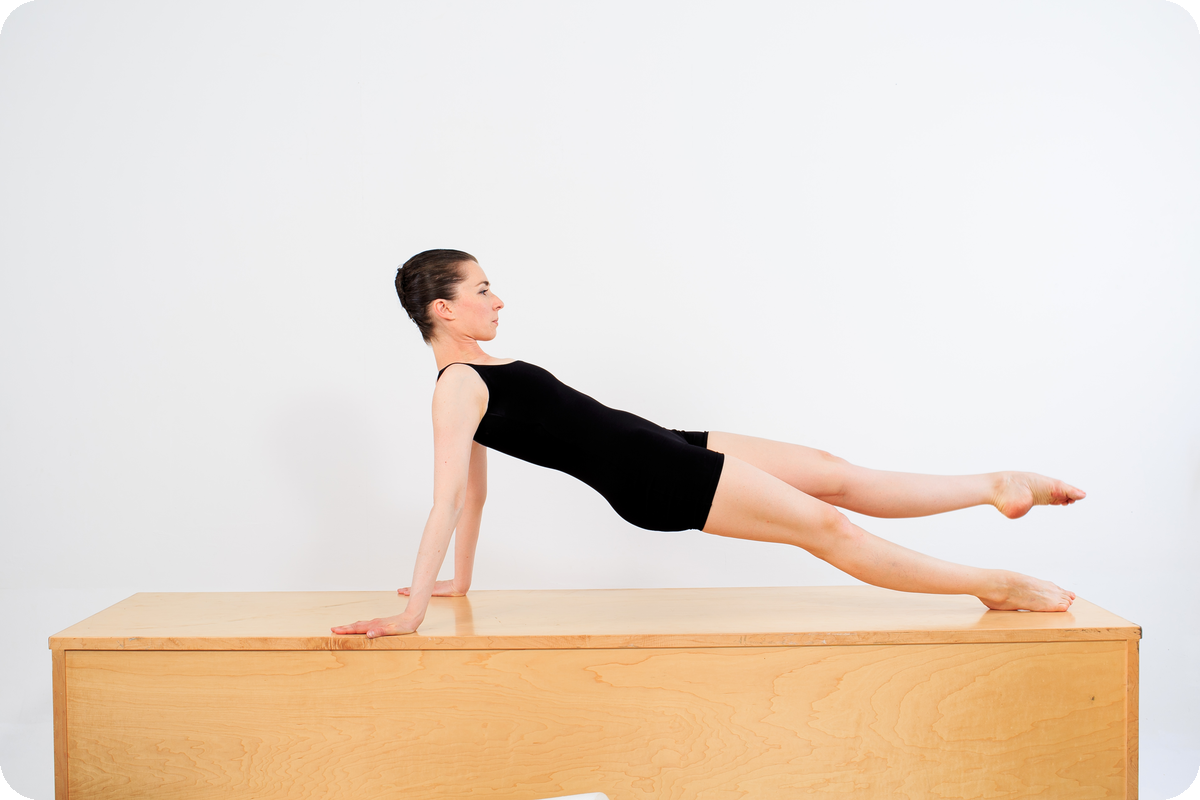
What changes when you are cued correctly
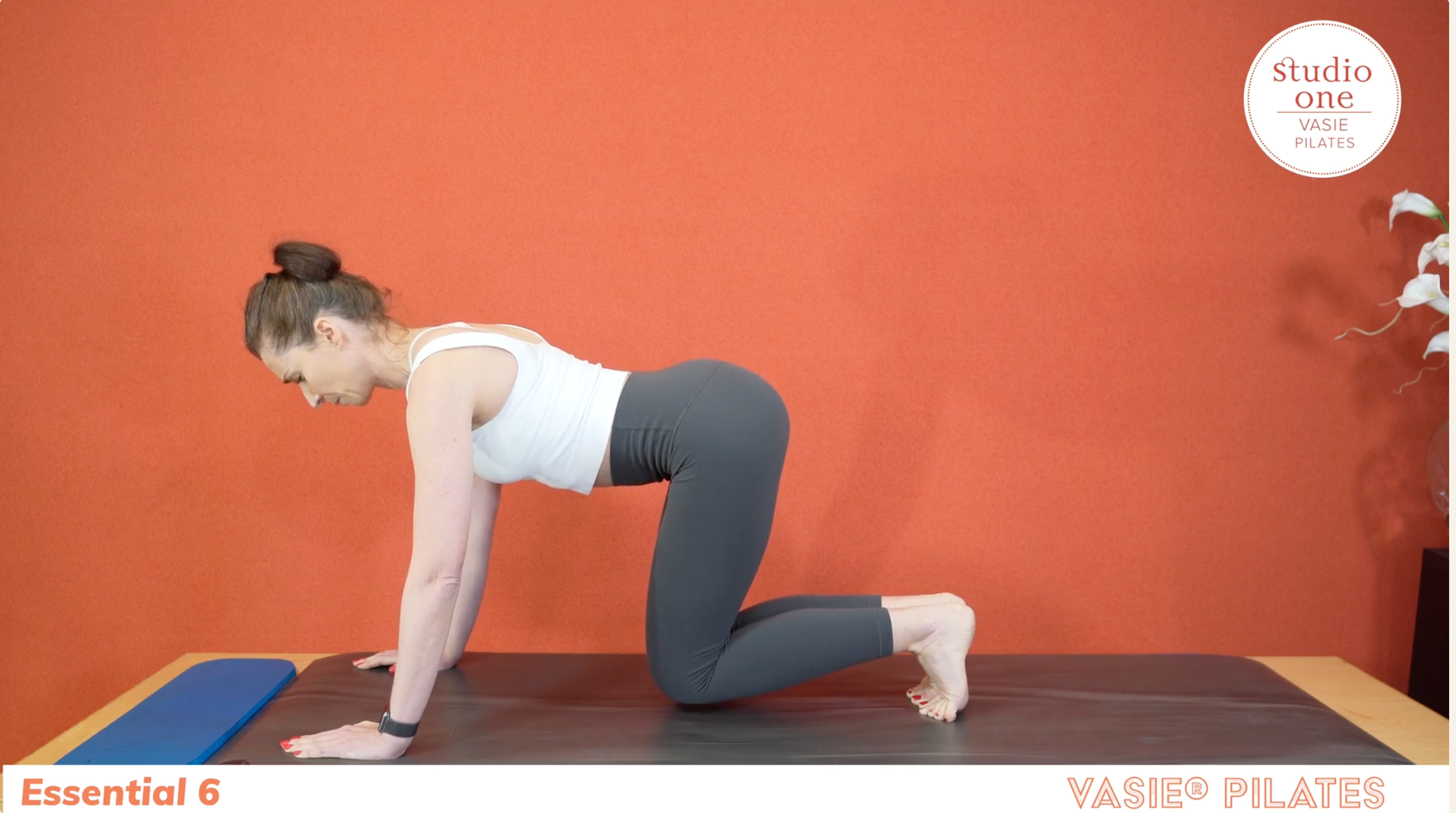
This is the first of the six VASIE® differences in action: core and posture automation. Your deep stabilizers (the transversus abdominis and multifidus, the corset muscles that wrap your waist) are reflexive. They are not under conscious control. So we will never say "engage your core." Instead, VASIE® instructors are trained to cue the conditions that make those muscles fire on their own: breath through pursed lips, toes pressing the mat, inner thighs drawing together, a slow pace that lets the stabilizers keep up.
The same principle governs safety. Safety in a VASIE® class comes from the exercise design, the low load, and joint neutral. It does not come from a warning. So instead of naming the danger, we name the action that prevents it:
- Not "don't let your back arch," but "stay strong through your ribs, and exhale until you feel your ribs come together."
- Not "don't lift in pieces," but "lift in one piece, like a drawbridge."
- Not "don't let your hips move," but "pubic bone anchored, reach the leg long out of the hip."
- Not "don't pull on your neck," but "head heavy in your hands, eyes looking down."
- Not "engage your core," but "purse your lips like you're blowing a kiss, and press down to go up."
Every one of those cues keeps you safe. Each one also points you to something you can actually feel and do. Notice how none of them are soft. "Squeeze those glutes." "Reach the leg out of the pelvis." "Straight line from the ribs to the hip bones to the knees." These are strong, specific, demanding instructions. They happen to point to where you are GOING rather than what might go wrong!!
We also build each exercise in layers. Three to five repetitions, each one a little harder than the last, and you choose how spicy you want today to be (we call them chili peppers: one, two, or three). That is Wulf's second factor, autonomy, built into the room. Your body on a Tuesday after a long day is not the same as on a rested Saturday morning, and the class is designed so both get a good workout.
What it feels like in class
Clients perceive this before they can name it. One longstanding client, who came to us with a childhood spinal fracture, sciatica, and a list of treatments that had not held, wrote: "I am no longer fearful, but look forward to becoming stronger." Another, who had injured herself every time she tried to get in shape, said VASIE® was "the only form of exercise where I have been able to build myself up without injury." The second sentence is the method. The first is the cueing.
Since 2000, more than 10,000 clients have trained this way. We measure height and waist before and after every client's first two-week intensive, same tool, same exercises, same cues. Across hundreds of clients, the average is over 3 inches off the low abdomen and three-quarters of an inch of height. It is our studio record, not a clinical study, and it has held for twenty years. We mention it here because the cues are part of what produces it: a nervous system that is not bracing against a warning can let the deep core do its job.
Try this today
Catch one "don't" in your own head and swap it for the action. Lifting a laundry basket: not "don't hurt my back," but "press the floor away, long neck, breathe out while I rise." Getting up from the couch: not "careful," but "feet press down, body lifts in one piece." You are not pretending the risk is gone. You are giving your body a job instead of a fear. Do it for a week and notice how much lighter the movement feels.
Honest expectations
Changing how you move is a months-long project, in sixteen-week cycles, and no amount of encouraging words shortens it. Good cueing removes a brake. If you have pain that includes numbness, weakness, or changes in bladder or bowel control, please see a physician first; the room we are describing is a gym, not a clinic. And if an instructor has warned you about your back, they were right to care. They were handing you a goal without a map.
In Anchorage
Come hear the difference for yourself
Pilates 101 is a free 90-minute class where we teach six mat and five reformer exercises from the ground up, with hands-on corrections. You will leave knowing what "neutral" actually feels like in your own body, and you will not hear a single "don't."
Book Pilates 101 (free)Anywhere else
Feel what a well-cued deep core does
The free Flat Abs Fast mini course walks you through the breath and the hookup, cued exactly the way we cue in the studio. Twenty minutes, no equipment, done at home.
Start the free mini courseAna Kokaurova is a Certified Advanced Rolfer®, VASIE® Instructor Trainer, and co-creator of the VASIE® Pilates method.
Research cited
Bartura K, Görgülü R, Abrahamsen F, Gustafsson H. A systematic review of ironic effects of motor task performance under pressure: the past 25 years. Int Rev Sport Exerc Psychol, 2023.
Wulf G, Lewthwaite R. Optimizing performance through intrinsic motivation and attention for learning: the OPTIMAL theory of motor learning. Psychon Bull Rev, 2016;23(5):1382–1414.
Zech N, et al. Nocebo effects on muscular performance: an experimental study about clinical situations. Front Pharmacol, 2019;10:219.
Varelmann D, et al. Nocebo-induced hyperalgesia during local anesthetic injection. Anesth Analg, 2010;110:868–70.
Klinger R, et al. Nocebo effects in clinical studies: hints for pain therapy. Pain Rep, 2017;2(2):e586.
Zinn C. Doctors told to use positive language in managing pain. BMJ, 2003;326:301.
Elliot AJ. Approach and avoidance motivation (research program), University of Rochester.
Stay connected with news and updates!
Join our mailing list to receive the latest news and updates from our team.
Don't worry, your information will not be shared.
We hate SPAM. We will never sell your information, for any reason.